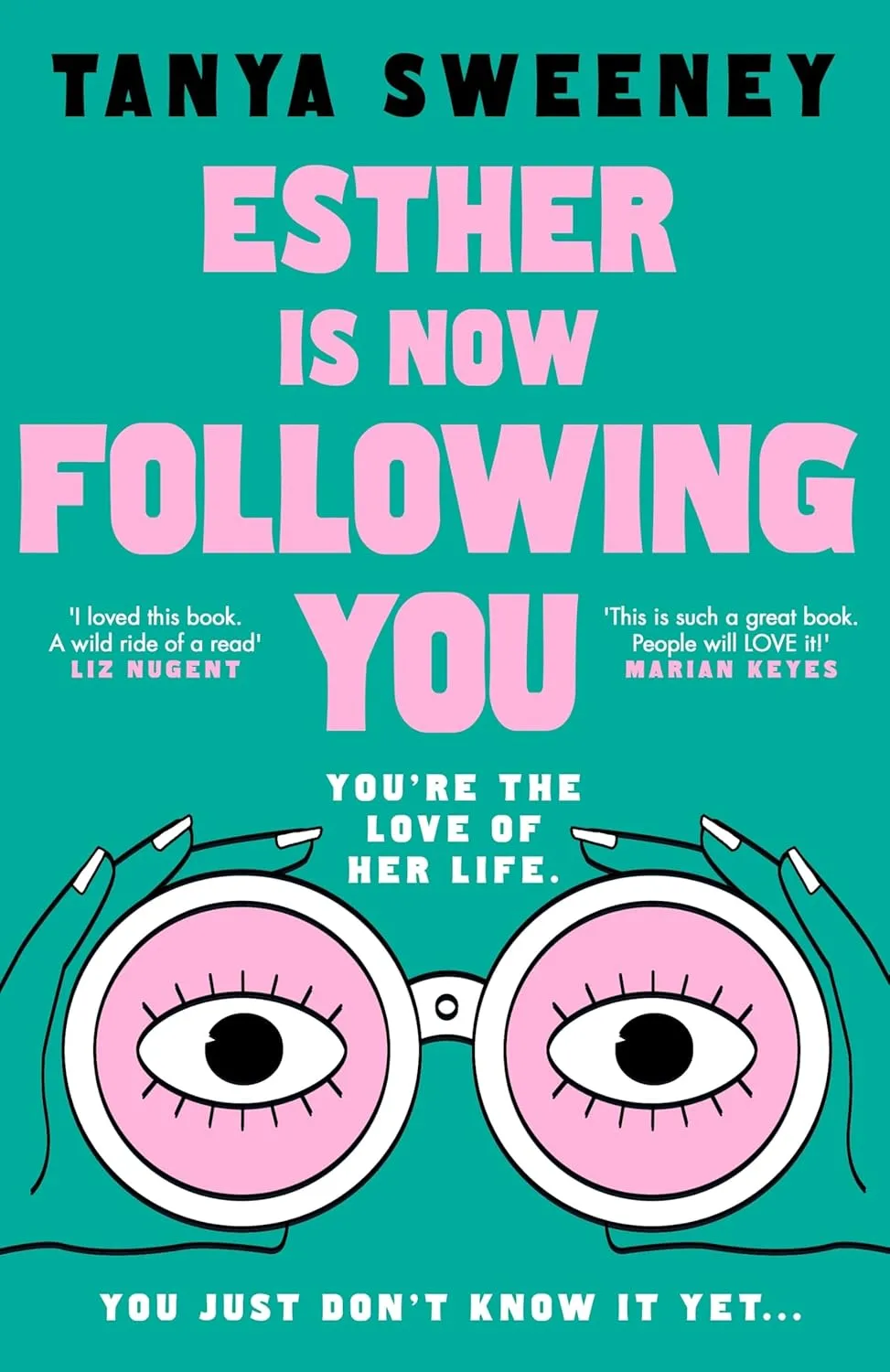
“Esther is now following you” follows Esther, a woman navigating grief and loneliness in the digital age.
When she becomes fixated on a stranger she encounters online, her perception of reality begins to unravel. The novel examines the blurred boundaries between connection and obsession in social media.
Publishing year: 2026
Page count: 320
The Reading Experience
I had high expectations. The description gave me exactly what I was looking for: a modern, digital story about obsession, identity and the darker side of social media. But from the first few pages, I realized I was making myself read it, not because it was hard, but because it felt slow and disconnected.
I found the writing style a bit off-putting. The sentences often felt stiff and drawn out, as if the author had rewritten every thought three times before committing it to paper. Instead of getting me hooked, the writing was a bit of a slow burner. To be frank, I spent more time than I expected on each chapter, but that wasn’t because they were complicated. It was more like waiting for a slow internet connection: you just feel frustrated at the end.
Even worse, the characters felt flat and distant throughout. I normally find myself able to relate to at least one character in a book. Here? Nothing. Esther, the main character, felt like a bunch of clichés; her sadness, her obsession, her inner monologues all felt fake rather than real. I just couldn’t get my head around why she did the things she did, and that’s a big problem when the whole plot is all about her mindset. I didn’t feel much empathy, to be honest. I was so detached that I even wondered if I’d accidentally picked up a textbook on sociopathy.
The time jumps didn’t help either. Instead of building tension, they just confused me. One minute I was in the present, the next in the past, then somewhere in between, and never fully immersed in the story. It felt like the author deliberately messed up the flow just to show off that she could write “experimentally.” Unfortunately, it didn’t come across as innovative; it just felt underdeveloped.
What Holds the Story Together
The way the book is set out is really good. The plot follows a clear trajectory: Esther grieves, Esther observes, Esther spirals. The theme is really relevant and compelling: digital obsession, parasocial relationships and the illusion of closeness online. At least, that’s the theory. But in reality, it often feels like a checklist: So, just think about the theme, add a character and then move on to the next point.
The logic inside is good, but that’s the best I can say. The characters are like puppets, existing only to move the plot along. Esther meets Ted, and suddenly she’s obsessed, but why? The bit where they first meet is so far-fetched I even checked I hadn’t skipped a page. I’m not sure that organic development is the best way to describe it. To me, it feels more like a plot device that’s just there because the story needs it.
The author tries to be witty and sharp, but Esther’s inner monologues often come off as cynical and forced. I’m usually fine with flawed or unlikable protagonists, but Esther was just exhausting. Her commentary felt like that of a character desperate to seem clever but never quite managing it.
Does It Really Work?
The book does actually work, technically speaking. There are no major errors or contradictions. Everything is put together really neatly, but that alone isn’t enough. This story doesn’t really have much heart, does it?
The main theme, which is how social media changes how we see reality and closeness, is really interesting. But the execution just stays on the surface. Instead of drawing me in, I felt like I was reading a PowerPoint presentation. I got the points, but I didn’t actually experience them. The characters can be switched around, the emotions are more like ideas than real feelings, and there’s no tension at all.
Who This Book Is For
- Readers who enjoy concept-driven stories and don’t mind sacrificing character development.
- Fans of social media thrillers who are more interested in the idea than the execution.
- People who like books that read like long, analytical essays just without the depth.
Who Should Skip It
- Anyone who needs characters to feel like real people.
- Readers who expect emotional engagement.
- Those who value a smooth reading experience.
- And especially anyone who doesn’t want a protagonist whose self-satisfied attitude drives them up the wall.
Content Warning
This book deals extensively with themes of loss and grief, both as background motivation and as an ongoing emotional focus throughout the story.
Summary
I’m giving this book two stars because it’s like a coffee machine that makes coffee, but not the kind you’d actually enjoy drinking. The idea’s there, and the execution is present.
But there’s a big difference between “interesting” and “good”, and this book falls somewhere in between without ever really hitting the mark for me.
Would I recommend it? Only with a few conditions. If you’re interested in the theme and aren’t expecting anything too fancy in terms of characters or style, you might enjoy it. I don’t think I’d read it again. I mean, even if someone said it gets better the second time, I just don’t see it.
If you like your psychological tension to feel more immersive and emotionally grounded, The Staircase in the Woods might be a better fit.