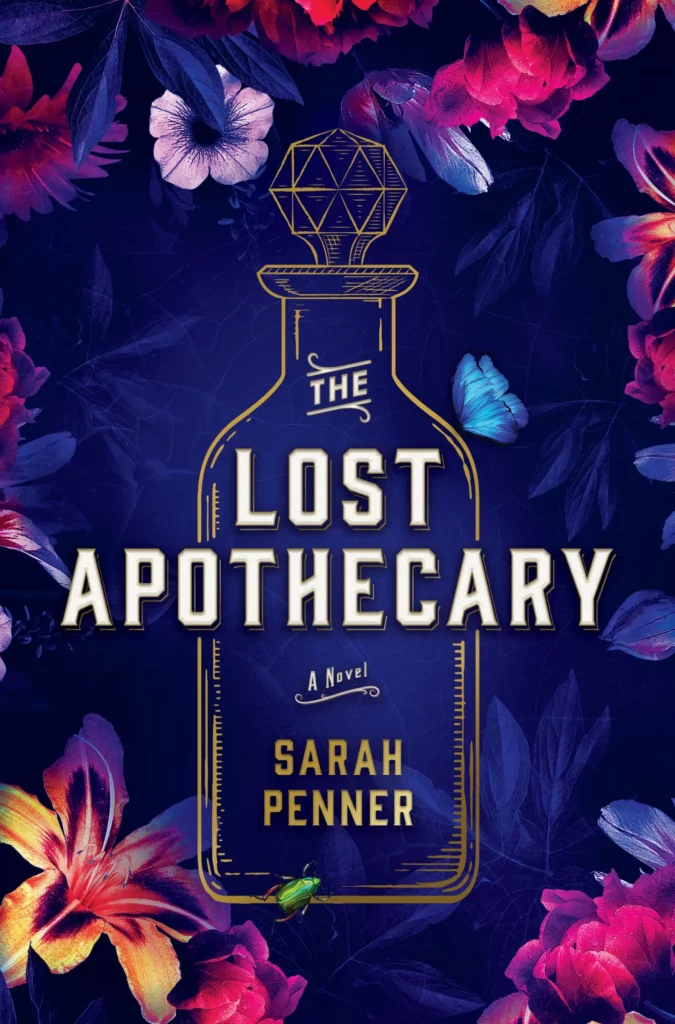
Hidden beneath eighteenth century London is a secret apothecary that serves women with problems their society prefers not to acknowledge.
Centuries later, a modern woman stumbles across traces of that history while trying to escape the slow collapse of her own life.
The story moves back and forth between two different timelines, full of poison, secrecy, and the subtle effects of choice.
Publishing year: 2022
Page count: 352
The Reading Experience
This is a slow, focused read. The novel takes its time setting up its rhythm and tone, so it might require some patience. There’s no need to rush towards a dramatic payoff. Instead, engagement comes from accumulation. Scenes keep replaying, routines keep getting established, and meaning keeps building up little by little.
I thought the pacing was pretty good. Even when there’s not much going on, the story keeps you hooked with its slow burn. It’s melancholy, but not over the top, and it never tries to be more dramatic than it is just to keep you reading.
What Holds the Story Together
The way it’s set up with two timelines is pretty straightforward, and it doesn’t try to do too much. Both threads are given equal attention, and neither exists just to support the other. The eighteenth-century parts are all about repetition, control, and survival within narrow boundaries. The modern timeline feels more open spatially, but emotionally unsettled, as if freedom itself has become another problem to solve.
Character work does most of the structural lifting. Nella, an apothecary in 18th-century London, moves through the world with precision and caution. Her rules and routines aren’t just quirks; they’re actually survival mechanisms. She’s not mysterious for effect. She’s controlled because control is the only safety she’s got.
In the modern timeline, Caroline is more reactive and seems a bit lost. She’s still trying to figure out what she wants, what she’s allowed to want, and why she can’t stop feeling dissatisfied. The two works are different because neither is idealized. They’re both shaped by constraints, just expressed through different centuries.
Secondary characters stay in the background, where they’re supposed to. Relationships develop slowly and feel earned, not conveniently timed to rescue the plot.
Does It Actually Work
Yeah, for the most part. The story’s still got internal logic, and actions are based on the situation and the character, not just to make the story go somewhere. The story doesn’t go into crazy detail about its connections or tie up every emotional loose end. Some outcomes still feel a bit off, like they were left on purpose instead of by accident.
Readers looking for surprises or edge-of-their-seat thrills might find the structure a bit too predictable. The book is more of a reflective read than a surprise.
Who This Book Is For
- Readers who enjoy historical fiction that prioritizes character and theme over pace.
- Readers who appreciate dual timelines used for reflection rather than momentum.
- Readers comfortable with quiet tension and emotional restraint.
Who Should Skip It
- Readers looking for fast pacing or frequent twists.
- Readers who prefer plot driven narratives with clear resolutions.
Final Verdict
The Lost Apothecary is a novel about what it means to have free will and what happens when you don’t. It looks at what people do when they don’t have a lot of options, and how much it costs to make a choice. The story doesn’t make its subject matter seem more attractive than it is and doesn’t give easy answers.
What’s important is the big picture. Little choices, subtle pushback, and the ways lives keep affecting each other over time, even if you don’t mean to.