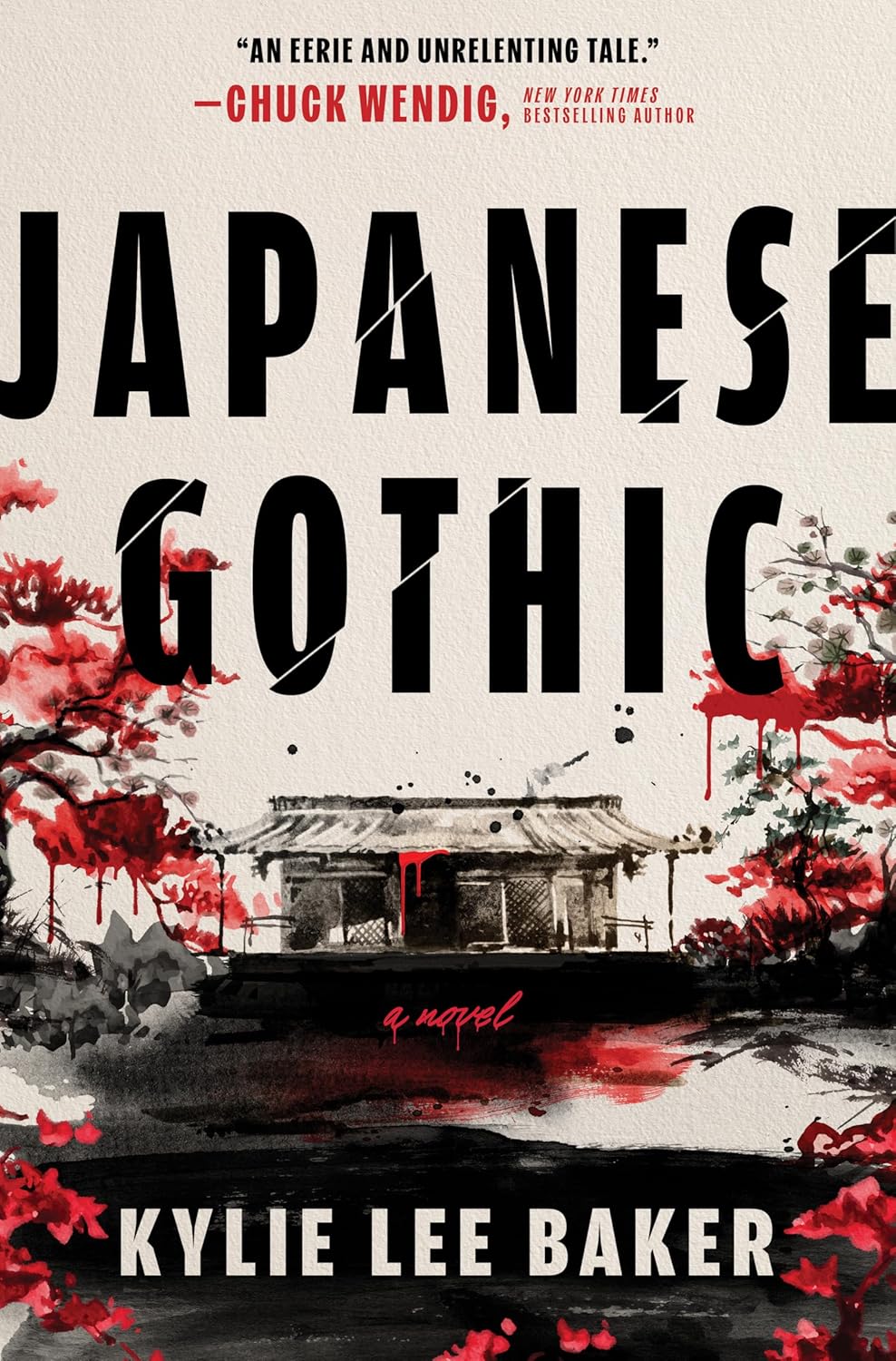
In October 2026, Lee Turner flees to his father’s eerie house in Japan, where a window is not always a window and a woman with a sword appears at night.
Meanwhile, in 1877, the young samurai Sen hides in the same house and faces a monster wearing her father’s face. Their intertwined fates circle a dark secret beneath the house, with one of the stories being a lie and one of them a ghost.
Publishing year: 2026
Page count: 351
The Reading Experience
So, Japanese Gothic. This was the April pick from my Illumicrate Evernight subscription, and I have to say, Evernight really delivered with this one.
I went in half-expecting a standard haunted house affair and ended up with something that felt like a slow-burn séance where the spirits actually had something to say. Baker’s storytelling here is a masterful blend of mystery, horror, and mythology, and she juggles it all without dropping a single cursed object. The story jumps between Lee Turner’s present-day scramble in 2026 and Sen’s historical chaos in 1877, and instead of giving me narrative whiplash, it created a complex, multi-layered experience that kept me hooked from the moment Lee high-tails it to Japan after a tragic incident with his college roommate. (Let’s be honest, fleeing the country is a level of post-roommate-drama I can’t help but respect.)
Lee’s side of things is thick with tension: he seeks refuge with a father he’s not exactly on cozy terms with, and the spooky vibe of his dad’s place sets up a perfect pressure cooker of suspense and self-reflection. You can almost feel the floorboards judging him. Meanwhile, Sen’s storyline in 1877 drags us into the fallout of the samurai class being abolished, and Baker doesn’t flinch from the cultural and family struggles that come with it. Her family’s need to hide adds a whole extra layer of dread and intrigue, wrestling with themes of loyalty and sacrifice that made me care even though my knowledge of Japanese mythology previously maxed out at “kitsune are cool.” Baker’s writing is vivid and emotional enough that you don’t need a PhD in yōkai to be pulled in; she paints the atmosphere so thickly you could almost bottle it.
The haunted house is the central nerve, cranking up the spooky meter while cleverly stitching Lee and Sen’s stories together. Baker mostly sidesteps lazy horror clichés (no creepy children singing nursery rhymes, thank the gods) and instead digs into the psychological depths, which kept me locked in. The dual-POV narrative winds their lives together in ways that are sometimes brilliant, sometimes genuinely confusing, but the intentional ambiguity just had me hypothesising and second-guessing alongside the protagonists. Honestly, it was more engaging than half the puzzle-box mysteries I’ve read that pretend to be clever but fall apart the second you breathe on them.
Conclusion
Japanese Gothic leaves a lasting impression that goes beyond making you side-eye dark corners for a week. It’s a deep exploration of identity and history that had me chewing on how messy people are and how the past refuses to stay politely in its timeline. I caught myself thinking about it long after I closed the book, the kind of mental haunting you actually want. The way the story skips between two timelines made me feel like I was wandering the haunted halls alongside the characters, which made the whole experience ridiculously immersive.
For me, Baker’s storytelling hit exactly the right nerve, and I’m just going to say it: this is one of the best reads of my year so far. It’s more than a ghost story; it’s a dive into the weight of memories and the eerie little spiderwebs that connect past and present. By the end, I felt like I’d actually lived in Baker’s world for a while, and it got me thinking, always a sign a book has done its job, and then some. If you’re into atmospheric, myth-soaked horror that respects your intelligence, this is your haunted house.
If you love haunted house stories, you should also check out my review of Hell House by Richard Matheson.